
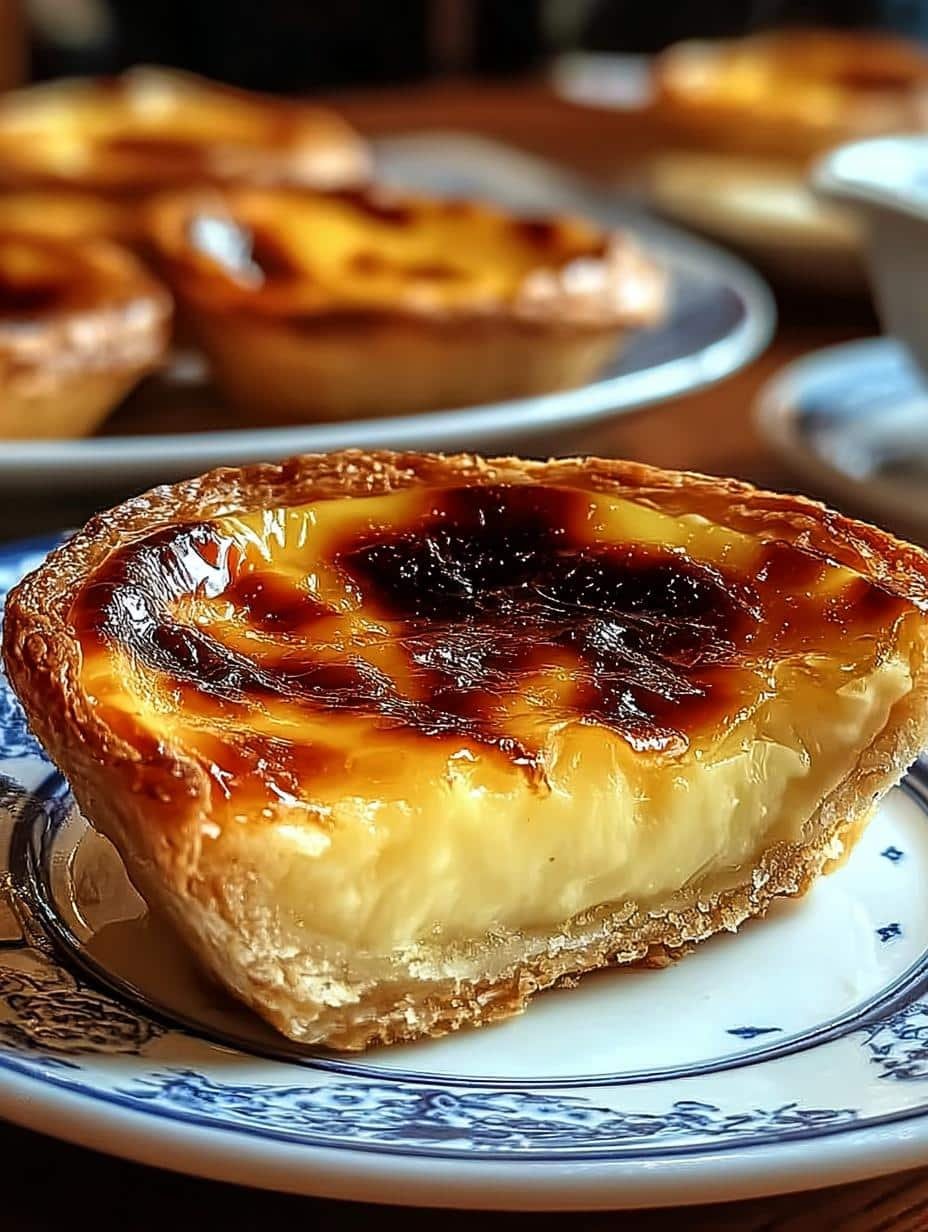
Portuguese custard tart has been my obsession since my first trip to Lisbon. I remember wandering through a small bakery, the air thick with the sweet scent of caramelized sugar and warm pastry. That first bite – a shatteringly crisp shell giving way to a silky, warm custard with just a hint of cinnamon – was pure magic. I’ve tried countless recipes since, aiming to recreate that perfect balance of textures and flavors, and I think I’ve finally cracked it. This recipe captures that authentic taste, bringing a little piece of Portugal right into your kitchen. Let’s get baking!
Why You’ll Love This Portuguese Custard Tart
Get ready to fall in love with these little bites of heaven. They’re surprisingly simple to make and deliver incredible results:
- Authentic Portuguese flavor that transports you straight to Lisbon.
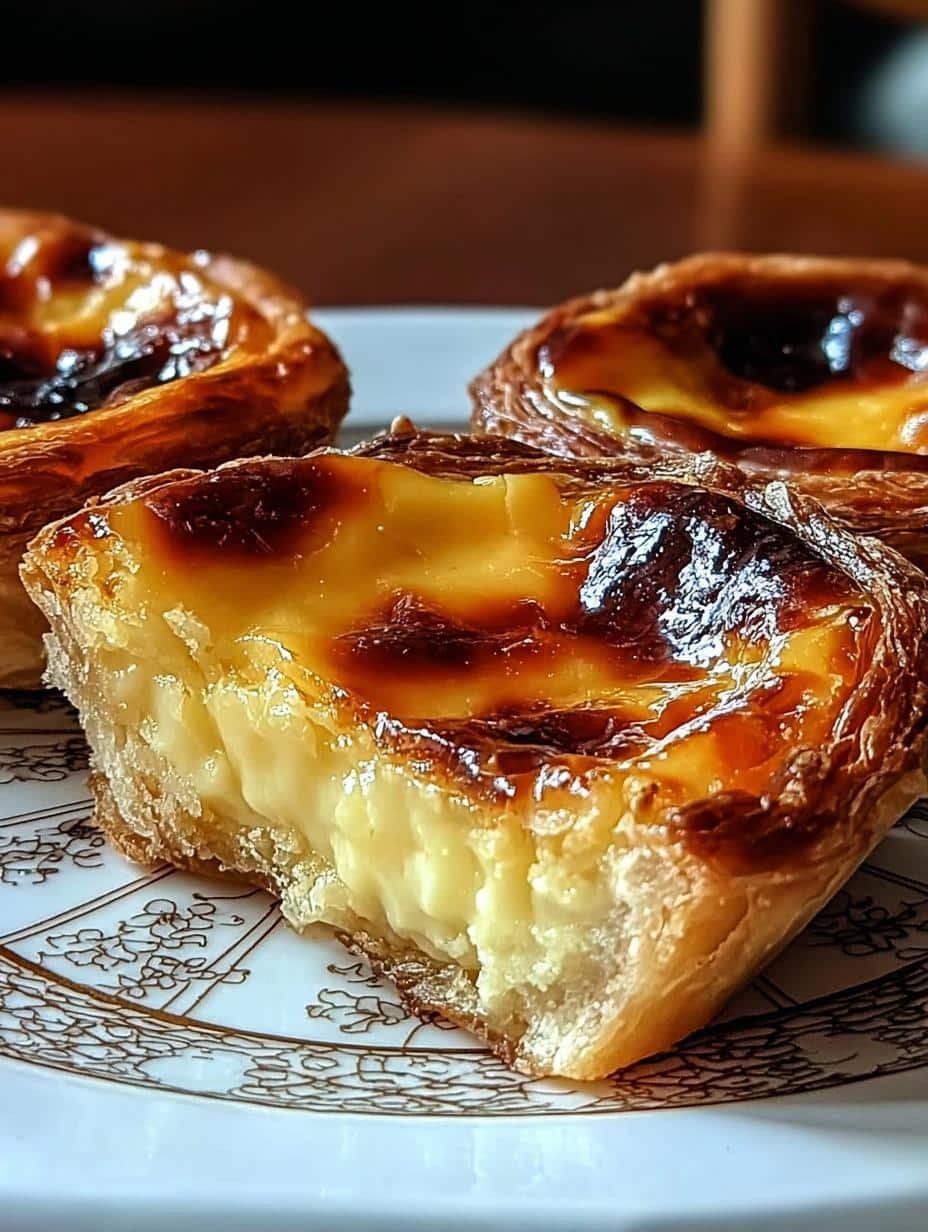
- The perfect contrast of flaky, crisp puff pastry and creamy, sweet custard.
- Caramelized tops provide a delightful slightly bitter counterpoint to the sweetness.
- They look and taste incredibly impressive, perfect for guests.
- A truly comfort food experience in every bite.
- Easier to make than you might think, even for beginners.
- The aroma while baking is absolutely divine.
- A satisfying dessert that’s not overly heavy, making it a wonderful treat.
Ingredients for Portuguese Custard Tart
Gather these simple ingredients to create your own authentic Pastéis de Nata. The key is in the quality and careful preparation, much like making a great beef stew with dumplings recipe, where each component plays a vital role.
- 1 sheet (about 250 g) puff pastry, thawed if frozen – for that essential flaky crust
- 1 cup (240 ml) whole milk – provides richness to the custard
- 1 tablespoon (8 g) all-purpose flour – acts as a thickener for a silky texture
- ¾ cup (150 g) granulated sugar – balances the custard’s sweetness
- ⅓ cup (80 ml) water – helps create the sugar syrup
- 1 cinnamon stick – infuses a warm, classic flavor
- 1 strip lemon peel (optional) – adds a subtle brightness
- 6 large egg yolks – the heart of the creamy custard
- 1 teaspoon pure vanilla extract – enhances the overall flavor profile
- A pinch of salt – balances the sweetness and brings out flavors
- Ground cinnamon (for topping, optional) – a traditional dusting
- Powdered sugar (for topping, optional) – for a final touch of sweetness
How to Make Portuguese Custard Tart
Creating these beautiful tarts is a labor of love, but totally worth it! Think of it like preparing a special meal, where the care you put in really shines through, similar to how you’d craft tender beef stew dumplings. Let’s get started!
- Step 1: Preheat your oven to a scorching 475°F (245°C). This high heat is crucial for that signature caramelization and crispy pastry. While it heats, prep your pastry. Lightly flour a surface and roll out your puff pastry sheet. Tightly roll it into a log, then slice into 12 even pieces. Place each slice cut-side down in a greased muffin tin. Use your thumbs to press and shape each piece into a thin shell up the sides. Chill these in the fridge while you make the custard.
- Step 2: Time for the sugar syrup. In a small saucepan, combine ¾ cup (150 g) granulated sugar, ⅓ cup (80 ml) water, the cinnamon stick, and the lemon peel (if using). Bring this to a boil over medium heat and let it bubble, without stirring, for about 3–4 minutes. You’re looking for it to thicken slightly, reaching around 220°F (105°C). Once it hits that point, remove it from the heat.
- Step 3: Next, let’s make the milk base. In another saucepan, whisk the 1 tablespoon (8 g) all-purpose flour with about 2 tablespoons of the 1 cup (240 ml) whole milk until it’s a smooth paste. Gradually whisk in the rest of the milk. Cook this mixture over medium heat, stirring constantly, until it thickens up just a bit, about 2–3 minutes. Take it off the heat to cool slightly.
- Step 4: Now, let’s bring it all together. Remove the cinnamon stick and lemon peel from your sugar syrup. Slowly, and I mean *slowly*, pour the hot syrup into the slightly cooled milk mixture while whisking continuously. In a separate bowl, give the 6 large egg yolks a gentle whisk. Then, gradually whisk the yolks into the warm syrup-milk mixture until everything is smooth and combined. Stir in the 1 teaspoon pure vanilla extract and the pinch of salt. For an ultra-smooth custard, strain this mixture through a fine sieve.
- Step 5: Retrieve your chilled pastry shells. Carefully fill each one with the smooth custard, leaving a little space at the top – they’ll puff up slightly.
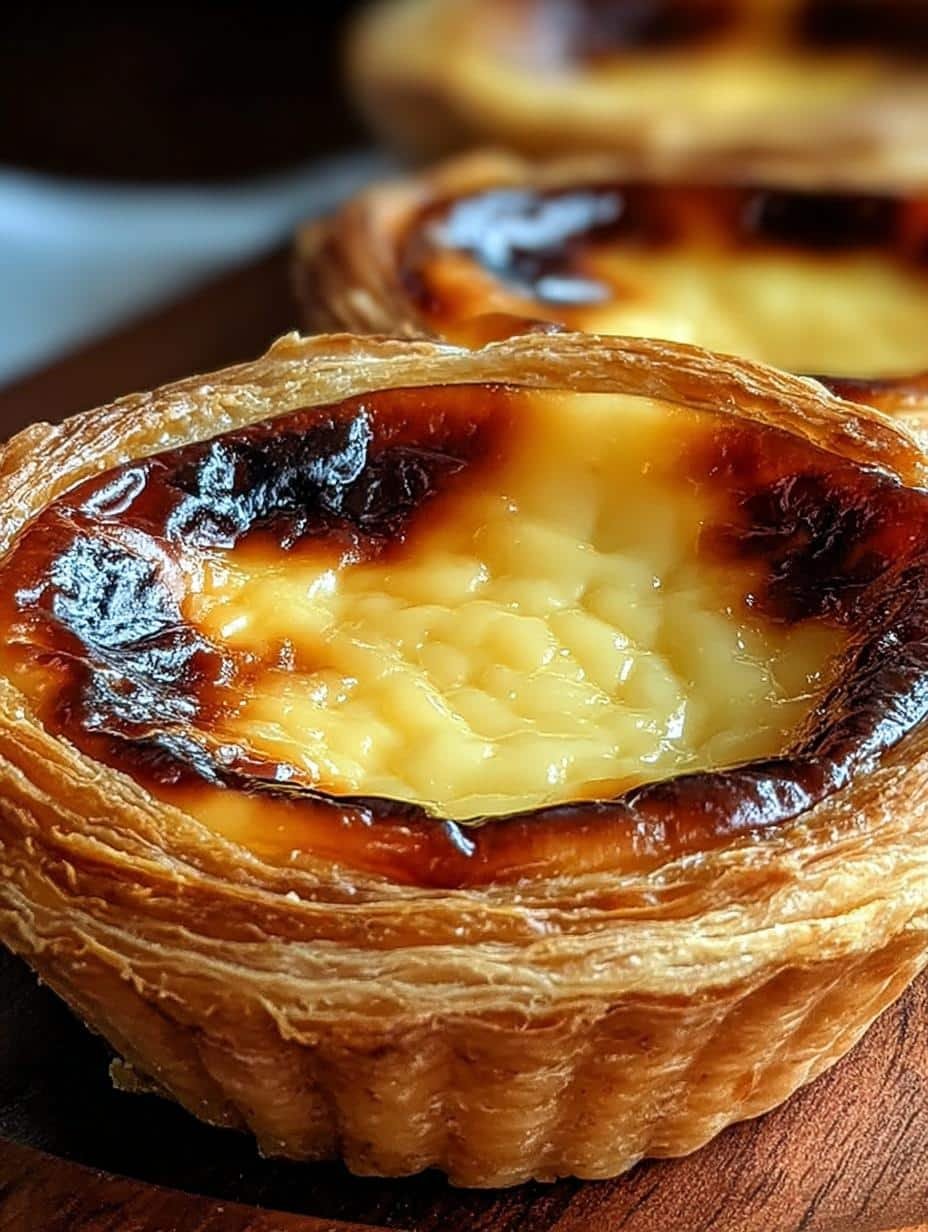
- Step 6: Bake these beauties for 12–15 minutes. You’re looking for the tops to get bubbly and beautifully caramelized, with those signature dark spots. The pastry edges should be a deep golden brown. Keep a close eye on them in the last few minutes; the custard should char slightly but not burn completely.
- Step 7: Once they’re out of the oven, let the tarts cool in the muffin tin for about 5 minutes. This helps them set. Then, gently transfer them to a wire rack to cool further. Serve them warm, perhaps with a dusting of ground cinnamon and powdered sugar. They’re truly divine when warm, much like a freshly baked dumpling topping.
Pro Tips for the Best Portuguese Custard Tart
I’ve learned a few tricks to make these tarts absolutely perfect every time. Following these simple tips will elevate your Pastéis de Nata from good to unforgettable.
- Don’t be afraid of the high oven temperature; it’s essential for achieving those signature caramelized spots and a super crisp crust.
- Make sure your puff pastry is well-chilled before you start shaping it. This prevents it from shrinking too much in the hot oven.
- Straining the custard is a non-negotiable step for that luxuriously smooth, silky texture that makes these tarts so special.
- Using metal muffin tins will give you the best heat conduction, ensuring your pastry bakes up beautifully golden and crisp all around.
What’s the secret to perfect Portuguese Custard Tart?
The secret lies in the extremely hot oven, which caramelizes the custard tops quickly, and the proper technique for shaping the puff pastry to get that flaky, delicate shell. It’s about balancing those textures and flavors. For more on baking techniques, you can explore resources on baking techniques.
Can I make Portuguese Custard Tart ahead of time?
While they are best enjoyed fresh and warm, you can prepare the custard up to two days in advance and store it in the refrigerator. Shape and bake the pastry shells just before serving for optimal crispness.
How do I avoid common mistakes with Portuguese Custard Tart?
A common pitfall is not using a hot enough oven, leading to pale custard and soggy pastry. Also, overworking the puff pastry can make it tough. Be gentle and ensure your oven is fully preheated. Understanding oven temperatures is key, and you can find more information on using an oven thermometer to ensure accuracy.
Best Ways to Serve Portuguese Custard Tart
These delightful tarts are wonderfully versatile. For a truly authentic experience, serve them warm, just as you would find them in a Lisbon pastelaria. Their sweetness pairs beautifully with a strong Portuguese coffee or a cup of black tea, much like how a rich stew can complement a side of fluffy beef stew dumplings.
You can also enjoy them at room temperature. A simple dusting of powdered sugar and a sprinkle of ground cinnamon is all they need. For a more decadent treat, consider serving them with a dollop of freshly whipped cream or a small scoop of vanilla bean ice cream. They make a stunning end to any meal, offering a taste of sunshine and tradition. If you’re looking for other dessert ideas, check out these smores cookie bars.
Nutrition Facts for Portuguese Custard Tart
Here’s a general breakdown of what you can expect in each delightful tart. Remember, these are estimates and can vary based on specific ingredients and preparation methods, much like the nutritional profile of a hearty beef stew with dumplings.
- Serving Size: 1 tart
- Calories: 210
- Fat: 10 g
- Saturated Fat: N/A
- Unsaturated Fat: N/A
- Trans Fat: N/A
- Carbohydrates: 25 g
- Fiber: 0 g
- Sugar: 15 g
- Sodium: N/A
- Protein: 4 g
Nutritional values are estimates and may vary based on specific ingredients used.
How to Store and Reheat Portuguese Custard Tart
While these tarts are undeniably best enjoyed fresh and warm, I’ve found they hold up reasonably well for a few days, making them manageable for meal prep. Once they’ve cooled completely on a wire rack, store any leftovers in an airtight container. They’ll keep nicely in the refrigerator for about 3 to 4 days. If you want to keep them even longer, you can freeze them for up to 3 months. Just make sure they are wrapped tightly to prevent freezer burn.
Reheating is super simple! For tarts stored in the fridge, pop them back into a preheated oven at 350°F (175°C) for about 5–7 minutes, just until warmed through and the pastry has regained some crispness. If reheating from frozen, you can place them directly into a 375°F (190°C) oven for about 10–12 minutes, or until heated through. This method is almost as good as fresh, giving you that satisfying pastry crunch and warm custard, much like enjoying homemade beef stew dumplings fresh from the oven.
Frequently Asked Questions About Portuguese Custard Tart
Can I make the custard for Portuguese Custard Tart ahead of time?
Absolutely! The custard base for these tarts is perfect for making up to two days in advance. Just let it cool completely, pour it into an airtight container, and store it in the refrigerator. This is a great way to get a head start, much like preparing elements for a classic beef stew dumplings recipe. When you’re ready to bake, simply shape your pastry shells and fill them with the chilled custard.
What can I use if I don’t have puff pastry for my Portuguese Custard Tart?
While puff pastry is traditional and gives that signature flaky texture, you can get creative. For a different take, consider using a simple shortcrust pastry or even filling pre-baked tart shells. Some people have even experimented with a biscuit crumb base, though it’s quite different from the authentic Pastéis de Nata. If you’re looking for a topping for a stew, what are beef stew dumplings made of? Usually flour, fat, and liquid, similar to a scone dough.
Why are my Portuguese Custard Tarts not caramelizing on top?
The key to those beautiful, dark caramelized spots is a very hot oven, typically around 475°F (245°C). If yours aren’t caramelizing, your oven might not be hot enough, or you might be baking them for too short a time. Don’t be afraid of a little charring – that’s where the flavor is! Keep a close eye on them during the last few minutes of baking to achieve that perfect, slightly bitter contrast.
How do I get my Portuguese Custard Tart pastry shells crispy?
Crispy pastry is all about keeping it cold and baking it hot! Make sure your puff pastry is well-chilled before shaping and filling. Then, bake them in a very hot oven. Using metal muffin tins also helps conduct heat effectively to the pastry bottom, ensuring a crisp finish. Chilling the filled shells for a bit before baking also helps prevent shrinkage and promotes crispness.
Variations of Portuguese Custard Tart You Can Try
While the classic Pastéis de Nata is divine, I love experimenting with different flavors and approaches. These variations offer a fun twist, sort of like how you might explore different ways to make homemade beef stew dumplings. Here are a few ideas to inspire your next batch:
- Citrus Twist: Add a little extra lemon zest or a splash of orange juice to the custard mixture for a brighter, zesty flavor profile. This is especially lovely on a warm day. For a similar citrusy dessert, try this orange zucchini bread.
- Chocolate Drizzle: After baking and cooling slightly, drizzle a bit of melted dark chocolate over the tops. It adds a decadent touch that pairs surprisingly well with the creamy custard.
- Vegan Pastéis de Nata: For a plant-based version, use a dairy-free puff pastry and create a custard using plant-based milk (like almond or soy), cornstarch or vegan custard powder, and a bit of vegan butter. These can be just as delicious as the traditional ones!
- Spiced Variations: Beyond cinnamon, try adding a pinch of nutmeg or cardamom to the custard for a different warming spice profile, offering a unique flavor profile similar to how spices enhance a hearty beef stew with dumplings.

1 Portuguese Custard Tart Recipe Secrets Revealed
- Total Time: 35 minutes
- Yield: 12 tarts 1x
- Diet: Vegetarian
Description
Experience the irresistible creaminess and flaky perfection of authentic Portuguese Custard Tarts, also known as Pastéis de Nata. These delightful pastries, with their crisp puff pastry shells and silky, caramelized custard filling, offer a taste of Portugal’s rich baking heritage.
Ingredients
- 1 sheet (about 250 g) puff pastry, thawed if frozen
- 1 cup (240 ml) whole milk
- 1 tablespoon (8 g) all-purpose flour
- ¾ cup (150 g) granulated sugar
- ⅓ cup (80 ml) water
- 1 cinnamon stick
- 1 strip lemon peel (optional)
- 6 large egg yolks
- 1 teaspoon pure vanilla extract
- A pinch of salt
- Ground cinnamon (for topping, optional)
- Powdered sugar (for topping, optional)
Instructions
- Prepare the pastry: Lightly flour a surface and roll out the puff pastry sheet into a rectangle. Starting from one long edge, roll the pastry tightly into a log. Cut into 12 even slices. Place each slice cut-side down into a greased muffin tin. Using your thumbs, gently press and shape each piece into a thin, even layer up the sides to form a pastry shell. Chill in the refrigerator while preparing the custard.
- Make the sugar syrup: In a small saucepan, combine the sugar, water, cinnamon stick, and lemon peel. Bring to a boil over medium heat and cook without stirring for about 3–4 minutes, until the syrup reaches about 220°F (105°C) or slightly thickens. Remove from heat and set aside.
- Prepare the milk mixture: In another saucepan, whisk flour with about 2 tablespoons of milk until smooth. Gradually add the remaining milk and whisk until combined. Cook over medium heat, whisking constantly, until the mixture thickens slightly — about 2–3 minutes. Remove from heat and let cool slightly.
- Combine the custard: Remove the cinnamon stick and lemon peel from the sugar syrup. Slowly pour the syrup into the milk mixture while whisking. In a separate bowl, lightly whisk the egg yolks, then gradually add them to the warm mixture, whisking until smooth. Stir in vanilla extract and salt. Strain the custard through a fine sieve to remove any lumps for an ultra-smooth texture.
- Preheat and fill: Preheat your oven to 475°F (245°C). Fill each chilled pastry shell with custard, leaving a little room at the top.
- Bake until golden and caramelized: Bake for 12–15 minutes or until the tops are bubbling and caramelized, and the pastry edges are deep golden brown. Watch closely during the last few minutes — the custard should form dark spots but not burn.
- Cool and serve: Let the tarts cool in the pan for 5 minutes, then transfer to a cooling rack. Serve warm, dusted with powdered sugar and a sprinkle of cinnamon.
Notes
- Use a very hot oven for crisp pastry and caramelized tops.
- Chill pastry before baking to prevent shrinkage.
- Strain the custard for a perfectly smooth texture.
- Use metal muffin tins for best results — they conduct heat evenly.
- Serve warm for the most authentic flavor and texture.
- Prep Time: 20 minutes
- Cook Time: 15 minutes
- Category: Dessert, Pastry
- Method: Baked
- Cuisine: Portuguese
Nutrition
- Serving Size: 1 tart
- Calories: 210
- Sugar: 15 g
- Sodium: N/A
- Fat: 10 g
- Saturated Fat: N/A
- Unsaturated Fat: N/A
- Trans Fat: N/A
- Carbohydrates: 25 g
- Fiber: 0 g
- Protein: 4 g
- Cholesterol: N/A